A three-by-three cyber-neon relay.
The relay is a single nine-cell grid. Each cell carries one of six neon glyphs — a cyan diamond, a violet square, a magenta arrow, a circuit trace, a frost-star, and a cascade prism. Hit LAUNCH, the glyphs cycle, and a small reward is added to the score panel. There is no animation longer than three hundred milliseconds; the relay is meant to be quick to read.
The whole loop — tap, watch the glyphs land, glance at the panel, tap again — takes about two seconds. We sized it that way on purpose. Long enough to feel like a tap, short enough that a fifteen-minute coffee fits twenty rounds.
Symbols and their pixel values
| SYMBOL | NAME | BASE SCORE |
|---|---|---|
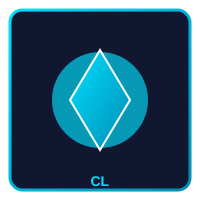 | Cyan Diamond | +10 |
 | Violet Square | +15 |
 | Magenta Arrow | +20 |
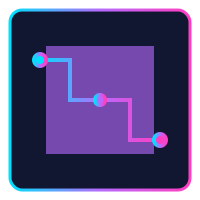 | Circuit Trace | +25 |
 | Frost Star | +40 |
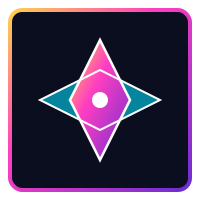 | Cascade Prism | +50 |
A still preview. The relay on the homepage is the live one.
House rules — five short notes.
- Tap LAUNCH. The glyphs cycle for about three hundred milliseconds and land in their final pattern. The score panel updates immediately afterwards.
- Match three matching glyphs across a horizontal line for a base score increment. The score panel ticks up by the symbol's base value.
- The frost star and cascade prism carry the higher base values — a small editorial nudge to make the rare glyphs feel rare.
- The score panel is decorative. It does not save between page loads. Closing the tab clears the relay back to its starting frame.
- There is no auto-tap, no auto-launch, and no scheduled reminder. The relay sits quietly until a hand picks it up and goes quiet again when the hand leaves.
What this relay is not: not a real-money game, not a reward platform, not a deposit-and-withdraw service, not a place where the score panel exchanges for prizes. It is a free social pixel grid for adults aged 18 and over. If the visual format brings up a memory of a real-money relay, the Power Down page is the right next page to read.
Designed-in stops.
The relay has three designed-in stops. The first is the LAUNCH button itself: there is no auto-tap, so every round requires an active tap from a hand. The second is the score panel: it does not save anything between visits, so closing the tab puts the relay back to a clean frame. The third is the absence of an account system — nothing remembers a return visitor, so the relay does not get a chance to learn how to keep someone on the page longer than they wanted to stay.
If you find that two or three rounds feel like exactly enough, that is the right number. The relay is sized for that shape, not for an evening that stretches into something else. If you would like a longer read on the design philosophy, the Circuit Board page covers the full studio standard.